
Whose Morality are We Willing to Legislate?

If you are holding to a liberal view of morality, you are going to vote for the candidate that best fits your views. If you are holding to more of a conservative stances on the aforementioned issues, then you are going to vote for the candidate that best fits you conservative values.

So please do not say, “Don’t push your morality on me!”  Because when we do vote, we are voting for the candidate that best lines up with our moral underpinnings.  And when you cast your vote, guess what you have just done?

There is no escape hatch for not legislating morality. We do it all the time. And the flip side of the coin is that I still thank God for those who don’t hold to an absolute standard and yet act morally.

If God Knew Man Would Fall, Then Why…?

There are many questions that are a challenge to the Christian faith, but this one came up the other night in a group that our family fellowships with. The person asking it during our group meeting really put some thought into it, and it is one worth our posting a response to it.  Perhaps you have heard this one as well. Here is the question:

If God has infinite knowledge, WHY did He create beings that He foreknew would sin and then sacrifice His Son to redeem them?

Answering the “God of the Gaps” Argument from Atheists

As it is with my opening illustration, a similar challenge is often thrown down when Christians are conversing with atheists on the issues of faith and science. In those conversations, the atheist may throw down a question where the Christian’s only answer is “God” to their vehemently skeptical inquisitor’s question. The atheist then accuses the Christian for throwing down what they call “god of the gaps” and dismisses the answer. How should the Christian respond to this?

Is God a god of our imaginations?

The origin of this objection comes from the influential German philosopher, Ludwig Feuerbach who pontificated this idea that God was made in the image of man and that God was a creation of the human mind.  And then Sigmund Freud also contributed to this “A theological dogma might be refuted to a person a thousand times, provided however, he had need of it, he again and again accepts it as true.”

Why Believe in Jesus’ Resurrection?

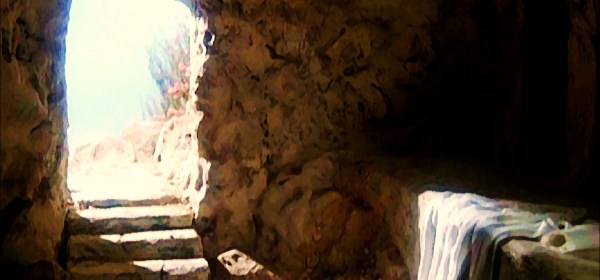
What makes Christianity different from other religions? It is the fact that Jesus Christ, the Founder of the Christian faith, rose from the dead. That’s right, Jesus was crucified in real history, but He also rose in literal time/space history. 

As you prepare to celebrate this resurrection holiday, let me give you three quick facts which give validity to Jesus’ resurrection. His resurrection was foretold in the Old Testament, prophesied by Jesus himself, and those who claimed to be eyewitnesses were willing to die for believing in a resurrected Christ.

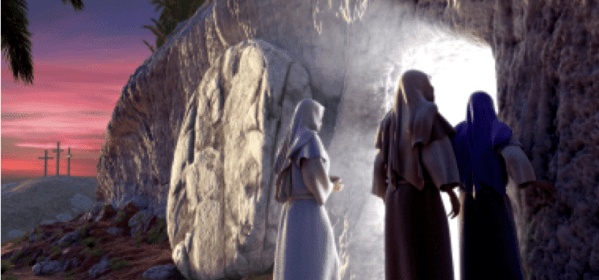
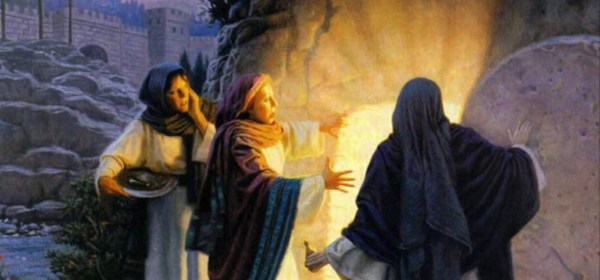
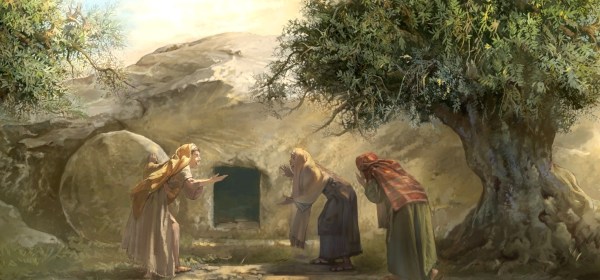
The Challenge of the Testimony by the Angel(s) to the Women at Jesus’ Tomb

Continuing with the fifth posting in this series, we have seen up to this point that the Garden Tomb accounts demonstrate very clearly that the gospel writers’ personalities were intact toward what the Spirit had inspired each of writers.  Each writer of the gospels chose what they wrote under the guise of the Holy Spirit.

For skeptics like the one who challenged me, this next posting is going to reinforce the points that I have presented up to this point. 

Angels or Angel, Men or Man? Who Announced His Resurrection?

If you have just been answering the question without reading the posts, you are missing out on a good Bible study thus far. For some these posts might be an introduction or a reintroduction to  hermeneutics, or a study in the harmony of the gospels, OR learning more about undesigned coincidences. Whichever the case, we will often run into a skeptic that will challenge passages, missing the fact that the minds and personalities of the writers of the gospels remained in tact when the wrote their particular accounts.

Are there contradictions in the time the women went to the tomb?

Continuing on the series on what happened at the tomb, another skeptic tells me that there is a problem with what the gospel writers record with reference to the time of day when the women arrived at the tomb of Jesus. Whenever critics of the Bible see one account differing from another in wording or phrasing, they are quick to point out that the gospel writers cannot be in agreement with one another.

This post is going to demonstrate that there really is no problem, and that there are no contradictions between the writers. 

1 2 3 4 5 6 8